
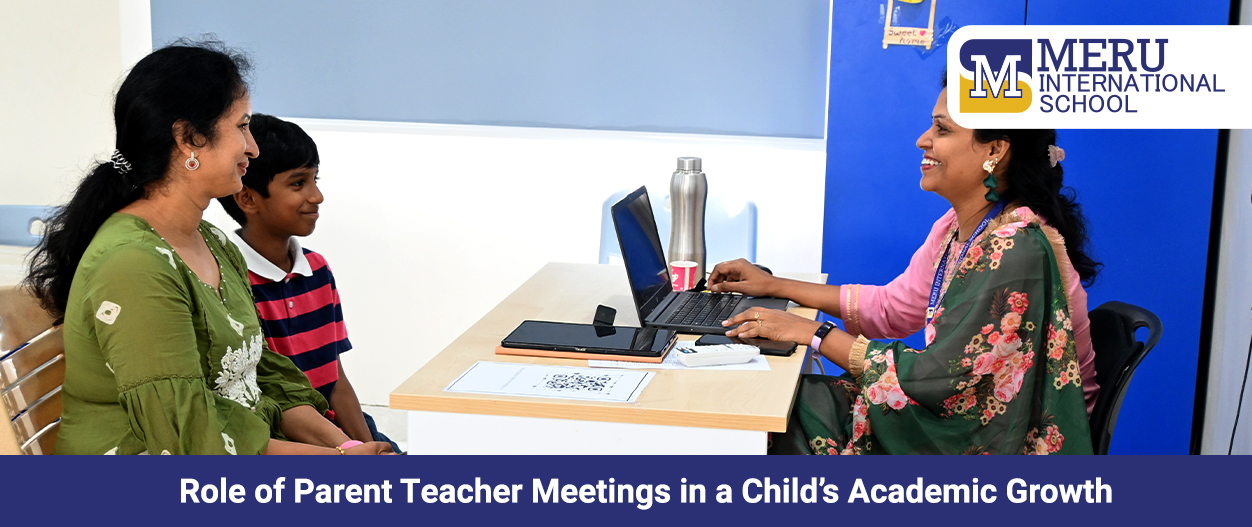
Role of Parent Teacher Meetings in a Child’s Academic Growth
A parent teacher meeting is not just an occasion where parents and teachers talk to each other at a scheduled time – it is the lifeline that links life at home and life at school. Taking place regularly at the academic level, such meetings can be regarded as an area of exchanging ideas, getting updates on the progress, and cooperating over the long-term goal of the complete development of a child. The importance of parent teacher meeting sessions lies in their capacity to foster trust, have clear objectives and draw plans that are mutually beneficial to the learner.
To any parent who wonders what to ask in a parent teacher meeting, it is important to note that this is your opportunity to understand what happens in the academic world of your child. Once the two communicate effectively, students will have stable support and encouragement both inside and outside the classroom.
How Do Parent Teacher Meetings Boost Academic Performance?
The question is, how can a parent teacher meeting affect the performance of a child in school? This is through active engagement. Where there is cooperation between teachers and parents, the academic strengths and weaknesses can be detected at an early stage and measures addressed to the same promptly.
These are how such meetings assist the students in achieving success:
- Academic Goals: The parents are able to know what is expected out of the child in regard to various subjects.
- Advance Checking of Problems: The teachers can raise the red flags, like slowness in learning or lack of concentration in the class.
- Individualised Plans: A plan could be worked out appropriately jointly so that it suits the learning style of the child.
- Home Supports: Parents are also able to help the student reinforce classroom goals by providing homework and education games.
The knowledge of the importance of parent teacher meetings in these regards allows for eliminating the possibility of lesser problems translating into long-term drawbacks. When there are parent teacher meetings regularly, the students tend to feel better supported and are likely to remain interested and motivated in the school.
What Role Do Parents Play in a Child’s Learning?
The parents are the initial and the most regular teachers of a child. They do not stop participating when a child gets to school, but, on the contrary, this is when it becomes more critical. Parent teacher meetings give parents a chance to participate actively in the making of their child in terms of learning activities.
This is how parents play a role:
- Establishing a Positive Family Environment: Children perform well when they are encouraged at home.
- Checking Study Habits: Parents can assist in providing routines and decreasing distractions.
- Fostering Curiosity: Open-ended questions regarding school aid the children understand what they have learnt.
- Expressing Expectations: The children know what to expect when both the teachers and the parents present a united message.
The best way to ensure that you get the maximum out of the parent teacher meeting is to prepare. What to ask in parent teacher meeting? These are the units to start:
- What is the average performance of my child as compared to that of the class?
- What are the major strengths and weaknesses?
- In what ways do they socially and emotionally behave?
Being interested, teachers will be able to tell more, and your child will realise that you are interested in his or her way.
What Do Teachers Learn from Parent Teacher Meetings?
As much as the parents need to know more about the behaviour and challenges their child faces at school, the teachers can also enjoy the view at home. A parent teacher meeting provides teachers with important background that might not be apparent in the classroom.
The important implications of the study for teachers are as follows:
- Home Dynamics: The familiarity of the environment of the child enables the teachers to change their approach.
- Learning Styles and Preferences: Parents are usually aware of their child's preferred methods of learning.
- Patterns of Behaviour: Behaviour at home can differ from that in school.
- Emotional Well-Being: Parents notify the teachers of events that have brought changes to the mental or emotional well-being status of the child.
How Can You Make the Most of Parent Teacher Communication?
Avoiding the passive and offensive nature of communication, respectful communication is necessary to make every parent teacher meeting useful and significant. Every parent teacher meeting is the same: only bigger. But some simple tips will ensure your next parent teacher meeting is always better.
Before the Meeting:
- List your questions and concerns, especially if you are unsure what to ask in the parent teacher meeting.
- Review past reports and any previous feedback.
- Talk to your child to hear their perspective and emotional state.
During the Meeting:
- Listen openly, even to difficult feedback.
- Take notes on key points and suggestions.
- Avoid confrontation; instead, focus on finding solutions.
After the Meeting:
- Follow through on action points at home.
- Stay in touch via email or school platforms.
- Encourage your child by involving them in their improvement.
Do not forget that parent teacher meetings are not important because they are formal but rather because they are geared towards sharing the schooling experience of your child.
Meru: The Best international school in Hyderabad
The importance of parent teacher meetings is that parent-teacher meetings are not academic status meetings; they are growth points. They are supportive and transparent and provide a chance to cooperate in the welfare of students. A kid can learn several things in a short period of time that could make the difference between a normal and an exceptional learner because of the common discussion between the home and the school.
At Meru International School, the philosophy holds that every child should be nurtured through interaction with parents and teachers. We have amicable, enlightening parent teacher meetings where every student is geared towards giving their best. Be it that you are concerned about the performance of your child or you are merely curious to know what to say in a parent teacher meeting, our team keeps you closer to being able to understand and support your child.
FAQs:
1. What is the role of parent teacher meetings in a child’s academic growth and performance?
Parent teacher meetings help track academic growth, discuss performance, and identify issues early. They align home and school support for your child’s learning through active teacher-parent communication.
2. What should parents ask in a parent teacher meeting to support academic progress?
Ask about academic performance, learning styles, behaviour, emotional well-being, and classroom expectations. These meetings help create effective home support to boost your child’s academic growth and success.
3. How do parent teacher meetings improve communication and learning outcomes for children?
Parent teacher meetings build two-way communication, allow joint planning, reveal academic and emotional needs, and ensure parents stay engaged in their child’s learning journey and overall academic performance.

Comments
No comments available.
Post a Comment